Aviation and Avionics Systems Guide

application/aviation-and-avionics, application/aviation-and-avionics, 
Inquiry
Inquiry

aviation and avionics

Aviation and avionics represent the technological backbone of modern flight operations, combining aerospace engineering with sophisticated electronic systems. Aviation encompasses all aspects of aircraft design, while avionics specifically refers to the electronic systems used in aircraft. The integration technologies ensures aircraft can operate safely in all weather conditions, navigate accurately across vast distances, maintain constant communication with ground control. These systems are critical for commercial airlines, military operations.The continuous advancement technology drives improvements in fuel efficiency, reduces operational costs, supports the industry's commitment to environmental sustainability while maintaining the highest safety standards.

New Products

Investing in advanced aviation and avionics systems delivers substantial practical benefits that directly impact operational success and safety. Enhanced safety stands as the primary advantage, with modern systems providing multiple layers of protection through collision avoidance technology, terrain awareness warnings, and automated emergency protocols that significantly reduce accident rates. Operational efficiency improves dramatically as aviation and avionics equipment optimizes flight paths, reduces fuel consumption, and minimizes maintenance downtime through predictive diagnostics. Airlines and operators experience measurable cost savings through reduced fuel expenses, lower insurance premiums due to improved safety records, and decreased maintenance costs from real-time system monitoring. Communication capabilities ensure pilots maintain constant contact with air traffic control and receive critical weather updates, enabling informed decision-making during all flight phases. Navigation precision allows aircraft to fly more direct routes, saving time and fuel while accessing airports with challenging approaches that older technology cannot support. The reliability of contemporary aviation and avionics systems means fewer flight cancellations and delays, improving customer satisfaction and revenue stability. Compliance with evolving aviation regulations becomes simpler as modern systems incorporate required capabilities and update easily through software modifications. Training efficiency increases because intuitive interfaces and standardized displays reduce pilot workload and shorten certification timelines. Data recording and analysis features provide valuable insights for continuous improvement, helping operators identify trends and optimize procedures. The resale value of aircraft equipped with current aviation remains higher, protecting your investment while ensuring compatibility with future airspace requirements and operational standards that will shape the industry's evolution.
Practical Tips

Why Traceable Tools Are Vital for Compliance

21

Sep

Why Traceable Tools Are Vital for Compliance

Why traceable tools are non-negotiable for audit readiness, legal protection, and operational excellence.
View More
Key Steps to Evaluate Used Plane Engine Materials

18

Sep

Key Steps to Evaluate Used Plane Engine Materials

How to properly evaluate used plane engine materials for airworthiness, safety & compliance. Avoid costly failures—get the expert 10-step inspection protocol now.
View More
How Plane Engine Sourcing Impacts Fleet Budgets

18

Sep

How Plane Engine Sourcing Impacts Fleet Budgets

How does plane engine sourcing really affect your fleet budget? Discover TCO drivers, spare parts costs, maintenance risks & ROI-optimized strategies. Download the guide.
View More
Sourcing Traceable APU Spare Parts Efficiently

18

Sep

Sourcing Traceable APU Spare Parts Efficiently

Struggling with APU part delays and audit risks? Discover how to source traceable APU spare parts efficiently while ensuring FAA/EASA compliance. Get actionable steps now.
View More

Get a Free Quote

Contact us for quotation and cooperation.
0/1000
Please upload at least an attachment
Upload up to 3 files (maximum 30 MB). Supported formats: JPG, JPEG, PNG, PDF, DOC, DOCX, XLS, XLSX, CSV, TXT, STP, STEP, IGS, X_T, DXF, PRT, SLDPRT, SAT, RAR, ZIP.
0/1000
Integrated Flight Management Excellence

Integrated Flight Management Excellence

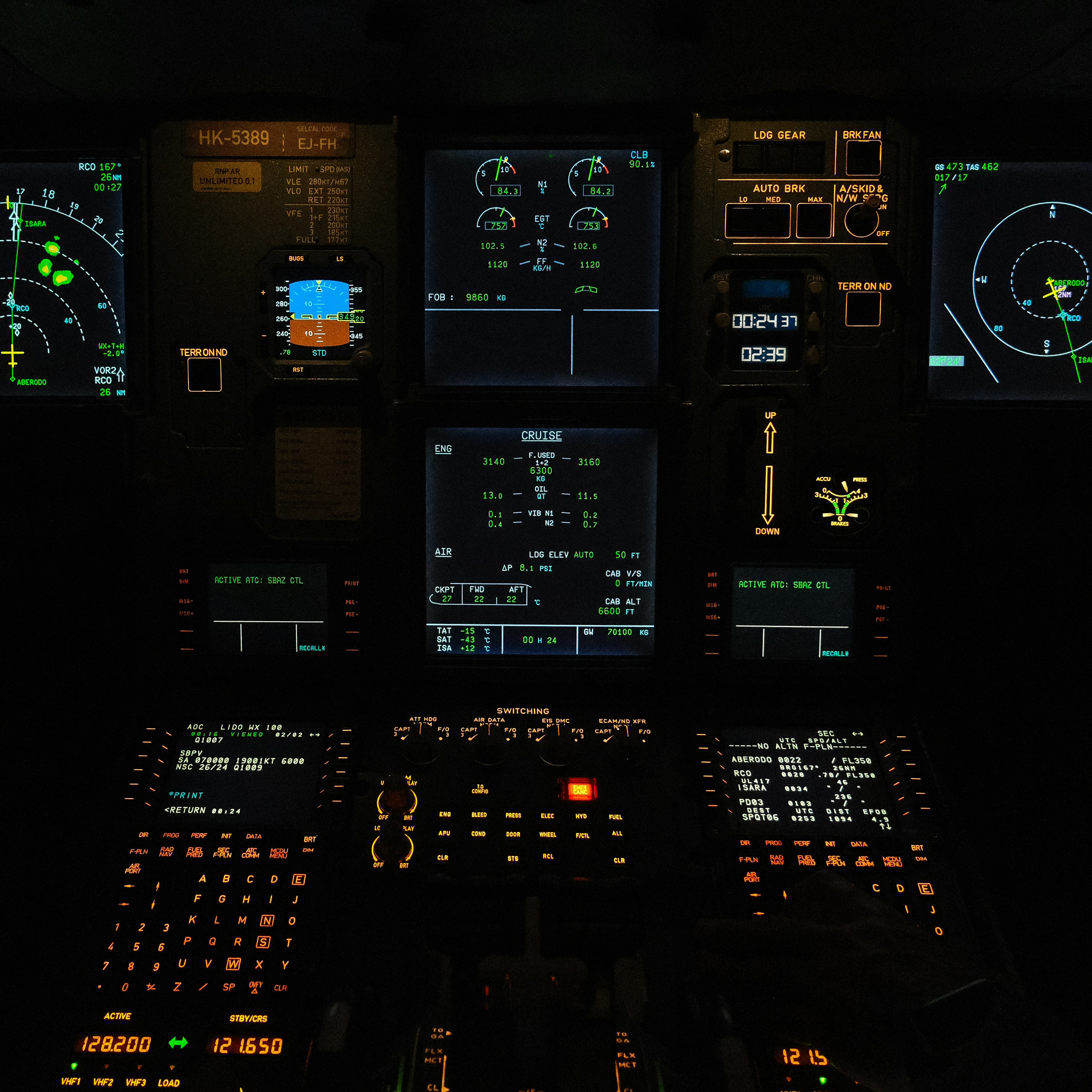
Modern aviation and avionics systems feature sophisticated flight management computers that serve as the central intelligence of aircraft operations. These integrated platforms combine navigation, performance calculation, and automation functions into unified interfaces that dramatically reduce pilot workload while enhancing precision. The system continuously calculates optimal altitude, speed, and routing based on real-time conditions including weather, winds, and traffic patterns. Pilots receive intuitive graphical displays showing entire flight profiles, fuel predictions, and arrival times with remarkable accuracy. This integration extends to autopilot functions that can execute complex procedures from takeoff through landing, maintaining exact flight parameters while pilots monitor overall operations. The aviation and avionics integration ensures all subsystems communicate seamlessly, sharing data to provide comprehensive situational awareness. Emergency situations benefit from automated assistance that immediately presents optimal diversion airports, calculates fuel requirements, and alerts appropriate authorities. Airlines utilizing advanced flight management capabilities report fuel savings exceeding ten percent on typical routes, translating to substantial annual cost reductions. The standardization of aviation and avionics interfaces across aircraft types also reduces training requirements and enables pilots to transition between different models more efficiently, providing operational flexibility that smaller operators particularly value.
Advanced Safety and Situational Awareness

Advanced Safety and Situational Awareness

Safety enhancements delivered by contemporary aviation and avionics technology extend far beyond traditional instrumentation, creating protective systems that actively prevent accidents. Traffic collision avoidance systems continuously monitor surrounding airspace, automatically calculating trajectory conflicts and issuing resolution advisories that have virtually eliminated mid-air collisions. Terrain awareness systems utilize global databases combined with GPS positioning to provide visual and audio warnings when aircraft approach dangerous ground proximity, especially valuable during approaches to mountainous airports or during reduced visibility conditions. Weather radar systems now offer three-dimensional storm visualization, turbulence detection, and windshear warnings that allow pilots to navigate safely around hazardous conditions. Synthetic vision technology transforms aviation and avionics capabilities by generating computer-generated terrain imagery during low-visibility operations, essentially allowing pilots to see through clouds and darkness. These layered safety systems work independently yet coordinate warnings to prioritize threats without overwhelming crews. Statistical evidence demonstrates that aircraft equipped with comprehensive aviation and avionics safety systems experience accident rates orders of magnitude lower than older technology. Insurance companies recognize this safety improvement through reduced premiums, while passengers increasingly prefer airlines operating modern equipment, creating competitive advantages beyond pure safety metrics for operators investing in current technology.
Communication and Connectivity Solutions

Communication and Connectivity Solutions

Communication capabilities within aviation and avionics systems have transformed from simple voice radio to comprehensive data networks connecting aircraft with global operational support. Satellite-based communication systems enable continuous connectivity regardless of location, supporting everything from routine position reporting to streaming weather updates and electronic flight bag synchronization. Data link systems allow controllers to send clearances and instructions digitally, reducing miscommunication risks inherent in voice transmissions while decreasing radio frequency congestion. Passengers benefit from these aviation and avionics communication advances through in-flight internet connectivity and live television, generating ancillary revenue for airlines while improving customer experience. Maintenance teams receive automatic system health reports during flight, allowing proactive parts ordering and technician scheduling before aircraft land, minimizing ground time. Emergency locator transmitters integrated within modern aviation and avionics architectures automatically activate and transmit precise coordinates during accidents, dramatically reducing search and rescue response times. Cybersecurity features protect communication channels from interference and unauthorized access, ensuring data integrity in an increasingly connected environment. Fleet operators gain unprecedented visibility into aircraft status and location, optimizing scheduling and resource allocation. The comprehensive connectivity enabled by advanced aviation and avionics systems creates operational transparency that improves decision-making at every level from flight deck to corporate management.